

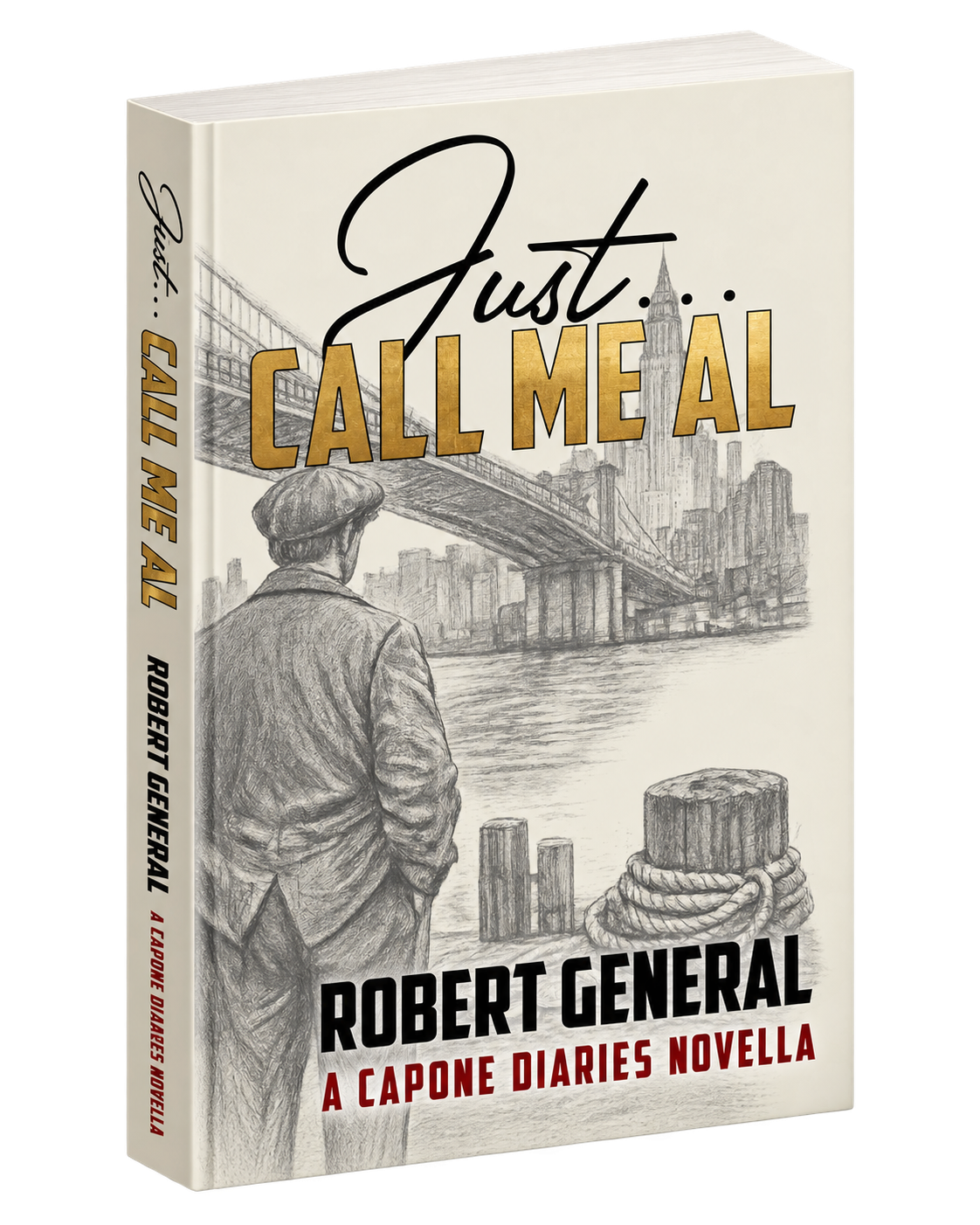
A Capone Diaries Novella | Historical Fiction | Robert General
Before the headlines.
Before the myth.
Before Al Capone became a name America would never forget.
Alphonse Capone is fourteen years old, growing up in Brooklyn and trying to figure out where he belongs.
The son of Italian immigrants, Al is pulled between family, faith, friendship, first love, and the rules of a neighborhood already teaching him what strength costs. He wants what most boys his age want — to matter, to be seen, to become someone.
But belonging has a price, and he just doesn’t know yet what that becoming will demand.
Small choices begin to carry larger consequences. Loyalty gets complicated. Promises become harder to keep. And the boy behind the future legend begins testing the rules and relationships that will help shape the man he becomes.
Just… Call Me Al looks past the mythology to imagine the human being who came first—not the kingpin, not the caricature, but a restless Brooklyn kid whose story has not yet been written.
This is not the story of Al Capone the legend.
It is the story of Al before the world knew his name.
Written by Robert General, Just… Call Me Al is the opening story in Capone Diaries, a historical fiction series exploring the people, relationships, choices and consequences behind the public figure history remembers.
Published by Argo Media Arts.
BEYOND THE PAGE
History usually meets Al Capone after the transformation is already complete.
Argo is interested in everything that came before it.
The Capone Diaries begins with a different proposition: instead of approaching one of America's most recognizable historical figures from the outside—from headlines, crimes and mythology—we build the world from the inside outward.
A boy. A family. A neighborhood. First love. Friendship. Faith. Ambition. Loyalty. Fear. The choices that seem small while they are happening and enormous only after history has had time to judge them.
That approach creates a story world much larger than a single book.
As the series moves from early-twentieth-century Brooklyn toward Chicago, the environment changes with Al. Streets become wider. Stakes become higher. Relationships deepen or fracture. A family story gradually intersects with organized crime, politics, celebrity and a country entering a dramatically different era.
It is inherently cinematic — but the attraction is not simply period imagery.
The real opportunity lies in watching history become history.
A Brooklyn street before anyone knows it matters. A friendship before anyone understands where it will lead. A young man making a choice without the benefit of knowing what generations later will say about him.
That gives The Capone Diaries room to grow across forms: novels and novellas, screen adaptation, character-centered stories, visual development, historical research, concept work and cinematic worldbuilding.
But every form begins in the same place.
With the people.
The goal is not to recreate the familiar iconography of Al Capone.
It is to make audiences temporarily forget that they already know how the story ends.
Because before there was a legend, there was a boy making decisions one day at a time.
And nobody living those days knew they were watching history begin.


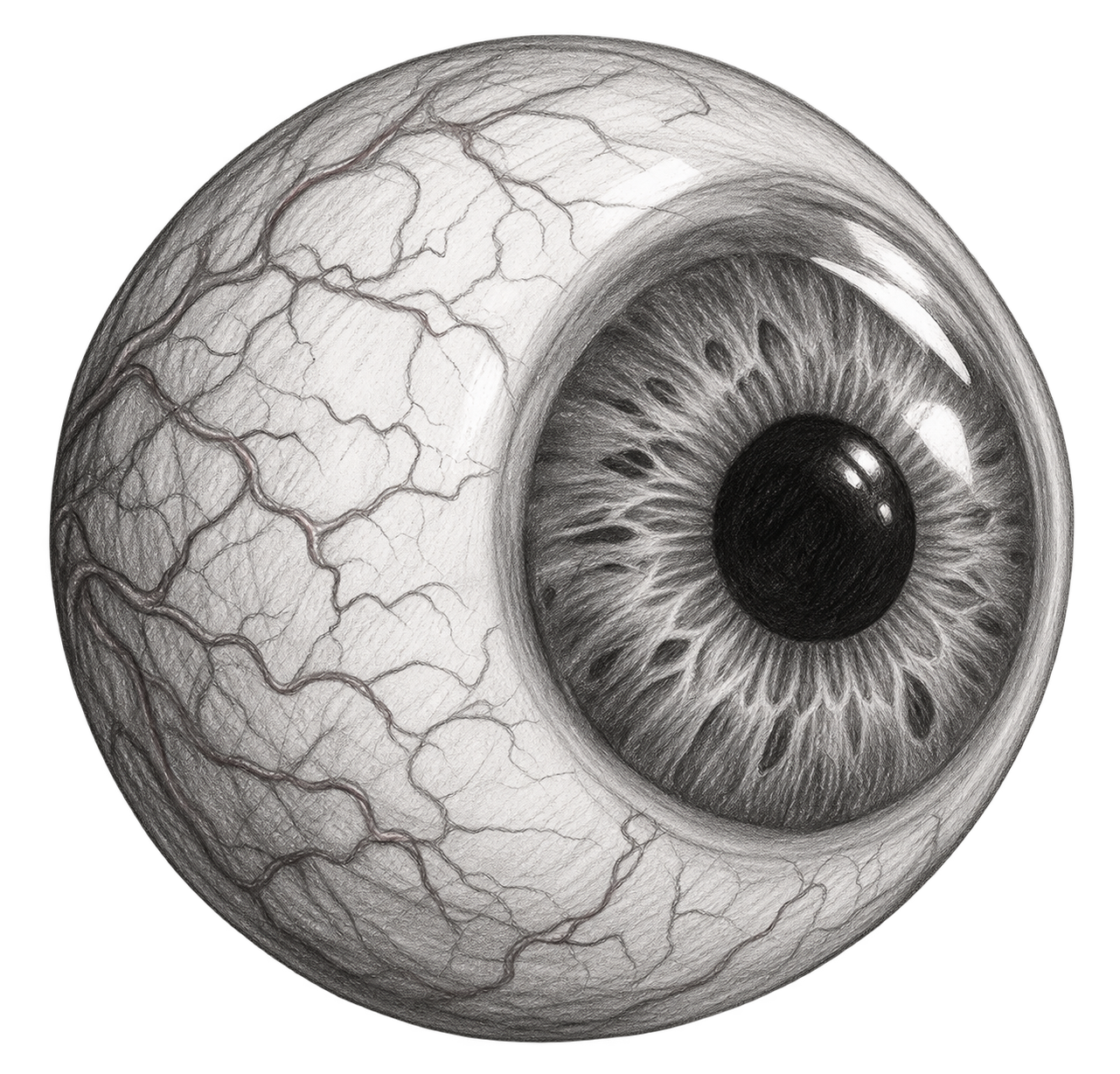
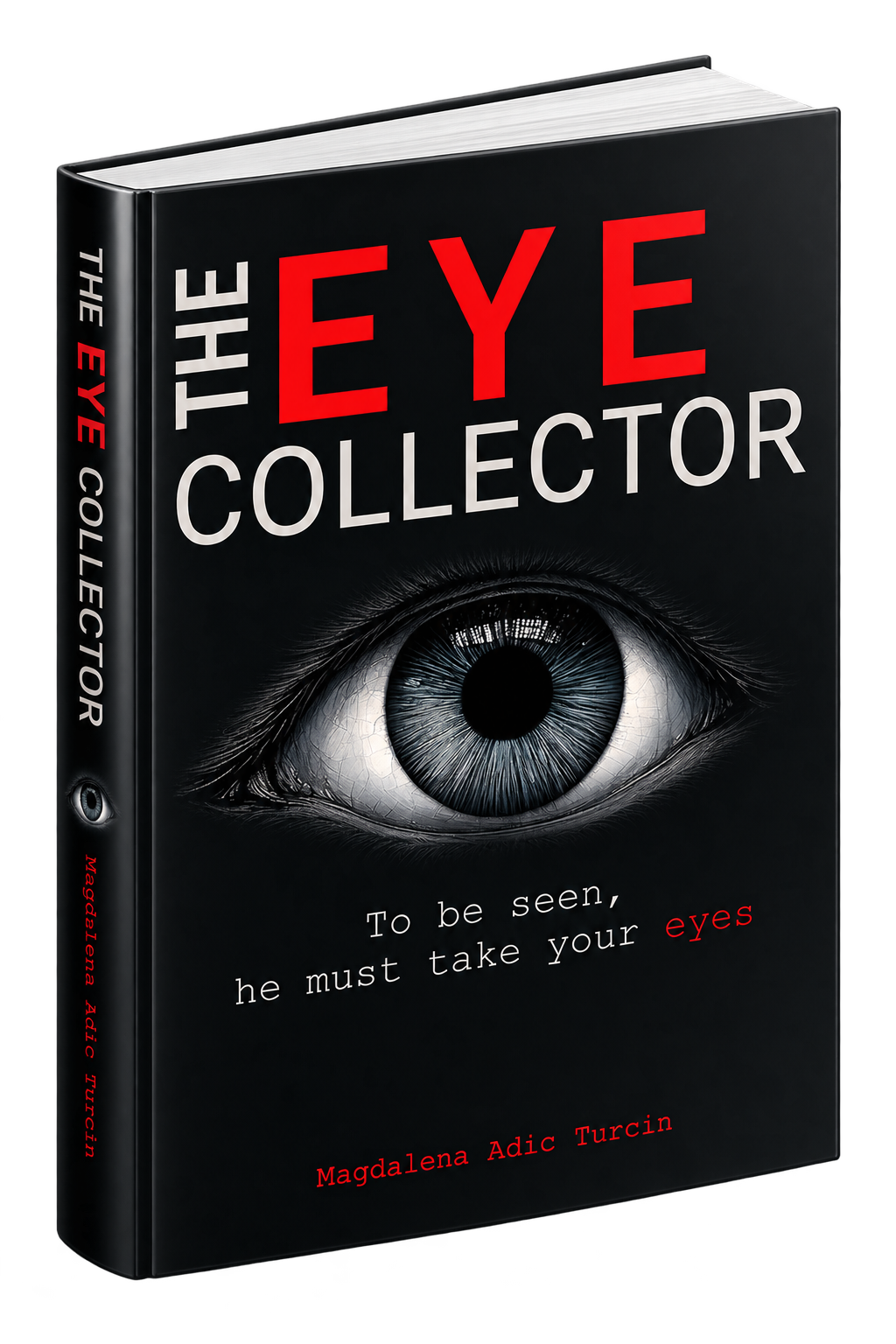
Psychological Thriller | Magdalena Adic
Screenplay Adaptation by Robert General
Some people collect objects.
Others collect the moments when people finally reveal who they are.
The Eye Collector is a psychological thriller about obsession, control, identity—and the disturbing intimacy of being watched.
The deeper its characters are drawn into the truth, the harder it becomes to know where observation ends and manipulation begins. Loyalties fracture. Perception becomes unreliable. And the distance between victim and participant begins to disappear.
At the heart of the story is a question more unsettling than the crimes themselves:
What happens when someone doesn't simply watch you—but studies you closely enough to know what you will do next?
The Eye Collector enters the darker territory beneath a conventional thriller, where understanding another person can become a form of possession and being truly seen may be more dangerous than being hidden.
Written by Magdalena Adić Turčin, the novel opens The Collector Series, followed by The Mirror Collector and the forthcoming The Echo Collector.
Its psychological tension, morally complicated characters and distinctive visual world have already taken the story beyond the novel through a screenplay adaptation by Robert General.
You can hide from someone who is looking for you.
But what if they already know exactly where to look?
BEYOND THE PAGE
Some stories expand when they move into another medium.
Others reveal something that was there all along.
For Argo Media Arts, The Eye Collector belongs to the second group.
The novel creates its tension through psychology, interiority and the gradual erosion of certainty. On screen, those same ideas can live somewhere else—in a pause that lasts too long, a reflection that does not feel accidental, an empty room, an unanswered look, a detail the audience notices before the character does.
That translation is where adaptation becomes creative development rather than reproduction.
Robert General's screenplay adaptation takes Magdalena Adić Turčin's original story and asks a new question:
What can the audience see that the reader was once allowed to think?
That shift opens an entirely new visual language for the property.
Eyes. Glass. Reflections. Darkness. Surveillance. Fire. Evidence. Empty spaces. Images that can mean one thing when first encountered and something very different once the truth begins to surface.
These elements are not decoration around the story.
They are part of how the story thinks.
And The Eye Collector is only the beginning.
The world continues through The Mirror Collector and the forthcoming The Echo Collector, allowing characters, consequences and unanswered questions to evolve rather than simply reset with each new story.
That creates opportunities across novels, feature-film development, visual concept work, cinematic teasers, character-driven material and the continuing expansion of The Collector Series as a psychological story world.
Argo's role is not simply to move the same story from one format into another. It is to identify what each medium can reveal that the previous one could not. The novel can enter a character's mind. The screen can make us afraid of what is standing just outside the frame. Visual development can establish a world before a single scene is filmed. Each form adds something. None should dilute what made the story distinctive in the first place.
Character first. Atmosphere second. Spectacle only when the story earns it.
The ambition is larger than adapting a thriller. It is to build a psychological world audiences can recognize, enter and continue following — one in which seeing clearly does not necessarily mean understanding what you see.
The book opened the door.
Beyond the page, we discover what was waiting on the other side.